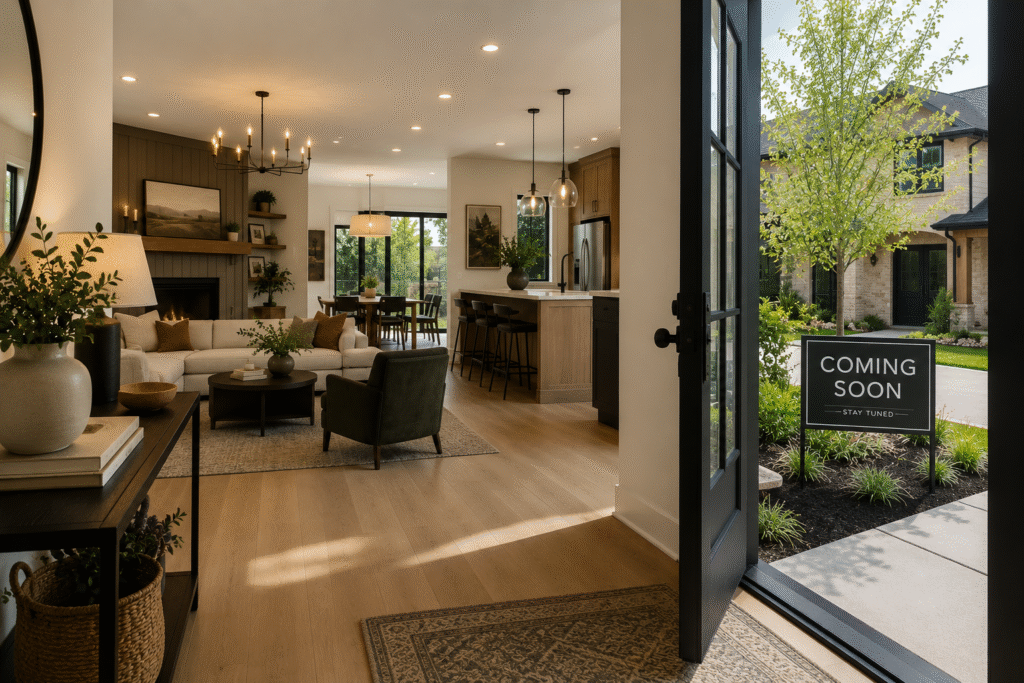
By the time most agents post a listing, they’re competing with every other new listing that hit the market that same day. A “coming soon” campaign flips that timeline. Instead of announcing a home the moment it’s live, you build anticipation before it’s even searchable, so by launch day, you already have interested buyers waiting.
Here’s how to structure one from start to finish.
Why "Coming Soon" Works
A listing that appears out of nowhere gets one shot at attention. A listing that’s been teased for a week or two gets multiple touchpoints, and each one builds a little more urgency. It also does something valuable for the seller: it creates the impression of demand before the home is even available to tour, which can lead to stronger, faster offers once it does go live.
For you, it’s a chance to generate content, leads, and buzz from a single listing well before the “official” launch, rather than cramming everything into a single post on listing day.
Before You Announce Anything: Get the Seller on Board
A coming-soon campaign works best when the seller understands and agrees with the plan. Walk them through:
- The timeline: how many days or weeks before the official listing date you’ll start teasing it
- What will be shown publicly (usually exterior shots or teaser angles, not the full interior)
- How you’ll be collecting interest (a waitlist, DM inquiries, or an early-access showing list)
Setting this expectation up front avoids any confusion about why the “for sale” sign is up before the listing is searchable online.
Stage 1: The Reveal Tease (7–10 Days Before Launch)
This is where you introduce the property without giving away too much.
- Post an exterior photo or a short video clip with a caption like: “Coming soon to [neighborhood] — details dropping soon.”
- Keep details vague on purpose: don’t share the price, exact address, or full room count yet. Scarcity of information is part of what builds curiosity.
- Invite people to join a list: “Comment ‘INTERESTED’ or DM me to be the first to know when this one hits the market.”
Stage 2: The Detail Drip (3–7 Days Before Launch)
Now you start giving away small, specific details, one at a time, spaced out over several posts or Stories.
- One post about the neighborhood: what’s nearby, what makes it desirable
- One post or Story revealing a standout feature: “This one has a chef’s kitchen with a 10-foot island”
- One post sharing the general price range, if the seller is comfortable with that
- A countdown graphic or Story sticker: “3 days until this one is live”
This stage is where most of your engagement builds, since people start commenting, asking questions, and sharing with friends who might be interested.
Stage 3: Early Access (1–3 Days Before Launch)
For buyers who joined your list, this is where they get treated like insiders.
- A private DM or email with the full address, price, and photos, ahead of the public
- An invite to a private showing or an early walkthrough before the official open house
- A simple, direct message: “You’re getting this before it’s public, since you asked to be kept in the loop.”
This step is what makes the waitlist worth joining in the first place. If people who sign up don’t get anything they couldn’t have gotten by just waiting, they won’t bother next time.
Stage 4: Launch Day
Now the full campaign comes together.
- The full listing goes live with complete photos, video walkthrough, and all details
- A “it’s here!” post referencing the anticipation you built: “The wait is over — full details below”
- Tag or notify everyone from your early access list directly, don’t just rely on them seeing the public post
- If there’s an open house, this is also a natural moment to promote it using everything from your open house content plan
Stage 5: Momentum After Launch
Don’t let the campaign end the moment the listing is public.
- Share early interest or showing activity if it’s genuinely strong: “3 showings booked in the first 24 hours”
- Post buyer feedback or agent walkthroughs if others in your office have started showing it
- If it goes under contract quickly, a “under contract” post reinforces the sense that your coming soon campaigns actually create real demand, which helps your next seller say yes to the strategy too
A Few Things to Keep in Mind
- Check local MLS and marketing rules. Some markets have specific rules around pre-marketing, coming soon statuses, or what can be publicly advertised before a listing officially hits the MLS. Know your local guidelines before building the campaign.
- Don’t overhype a home that can’t deliver. The tease only works if the reveal lives up to it. Save this strategy for listings with genuine standout features or strong market appeal.
- Keep the seller updated throughout. Sharing your posts and any early interest with the seller, as it happens, keeps them bought into the process and builds trust for future business.
Final Thoughts
A coming soon campaign turns one listing into a multi-week content and lead-generation opportunity, instead of a single post that competes with everything else hitting the market that day. Done well, it doesn’t just market the home; it markets you as the agent who knows how to create real demand.
Want ready-made coming soon templates for each stage of the campaign? Join Agent Social Haus for new templates every month, so you’re never starting the countdown from a blank page.